
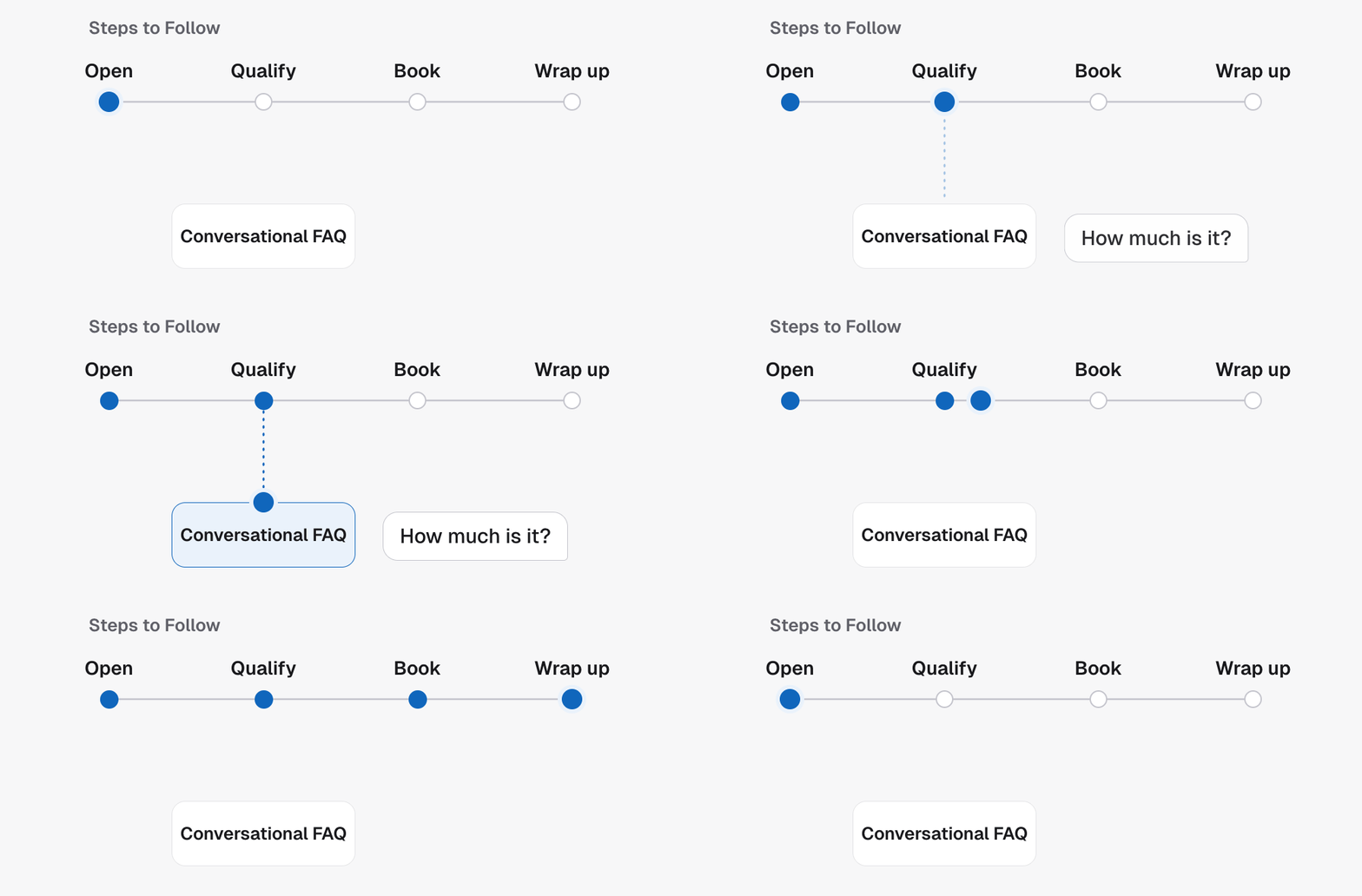
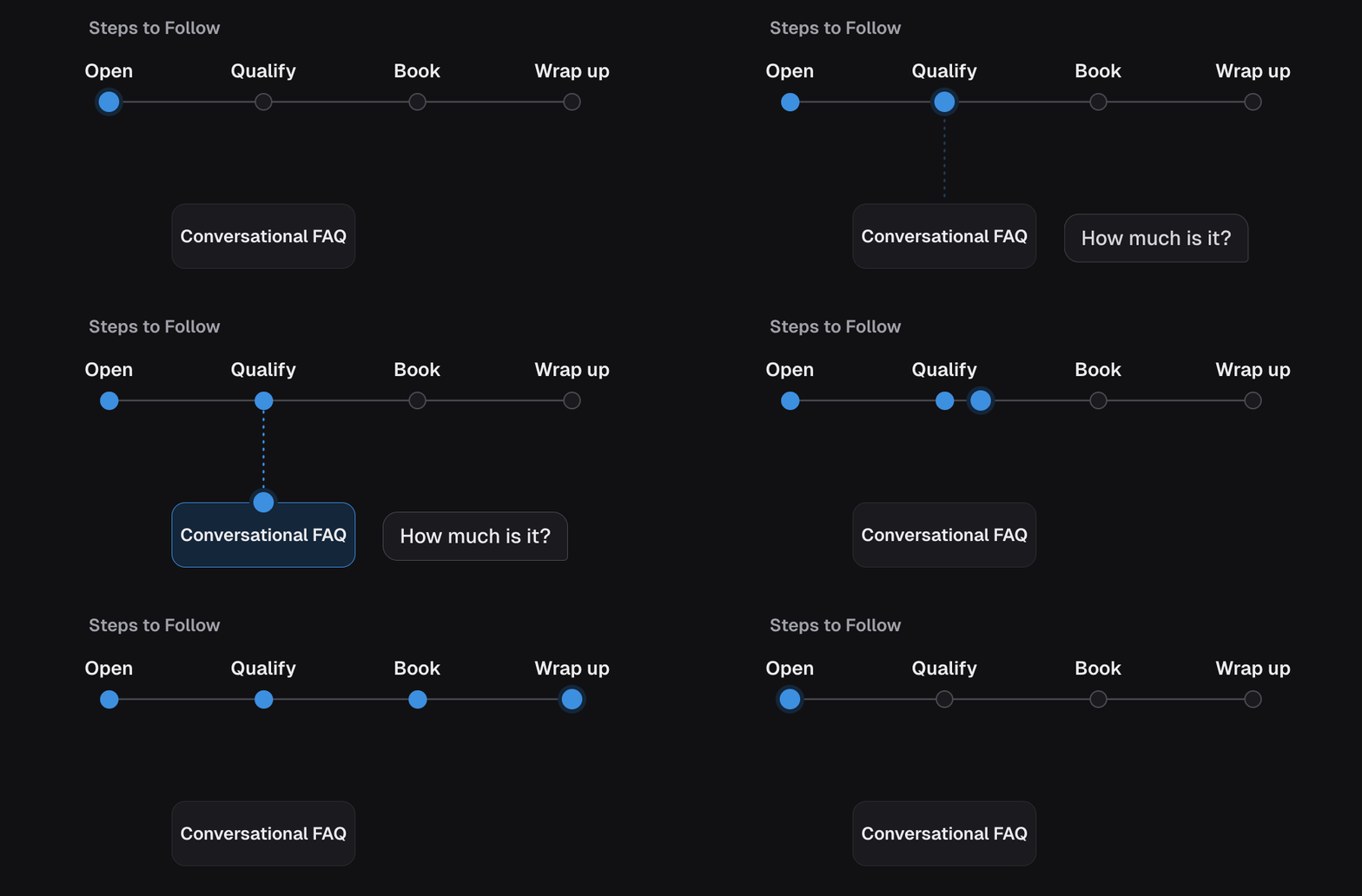
One rule before anything else
Objections are not steps. Neither are off topic questions. “Objection Handling”, “Address Concerns”, “Answer Questions” are never steps. A step is something the agent drives toward. An objection is something the lead throws at you, so it is reactive, and it lives in the Conversational FAQ. This is the single most common mistake in a step list, and it is worth holding the line on from the first draft, because a script with an “Objection Handling” step tends to go looking for objections.The shape of a step
Every step is built the same way.- The header is a goal plus the state it reaches. Never a bare topic noun. “Open, reach the right person and land why you called” is a step. “Introduction” is a label.
- A whole call is four to six steps, in order: open, qualify, optionally pitch or set up, the objective (book, transfer, tag), wrap. Twelve steps means you split the call by sentences. Two means you were too coarse.
- Plain prose underneath. No arrows, no “go to step 4”, no flowchart symbols. The agent reasons in language, not diagrams.
A worked example
This is a complete, well formed Steps section for an outbound agent that qualifies and then transfers. It is the quality bar. Square brackets are the parts you fill in for your business, and they are never spoken aloud.- Goal plus state headers on all four steps.
- A prose briefing under each, with the conditions written as normal English (“On an outbound call… On an inbound call…”, “If they’re outside those areas… otherwise move on”).
- Guide lines on the moments that carry the call: the opener, the hand off, the wrap. Step 2 has none on its header, because it itemizes instead.
- Step 2 collects four things one at a time, with the order pinned.
- Step 2 marks the service area list as internal, never to be read aloud.
- Step 1 puts a wait in words between two lines that are separate turns.
- Branches written on the step they affect, not in a routing block.
- No objection step. No backup plan step. The genuine next move, calling back later, is folded into Wrap.
A step is a goal, not a label
One step is one goal the agent drives toward, plus the state that means the goal is met. It is not a sentence and not a single utterance. Splitting a script by utterances is exactly why scripts turn to mush: the number of turns changes every call, the goal does not. Two tests:- The goal test. Can you name one thing the agent is trying to get or do here? One goal is one step.
- The exit test. Can you write a single “done when”? Two different answers means two steps. You do not have to print “done when” anywhere, because the state phrase in the header already is it: “get them willing to keep talking”.
What a weak draft produces
- Introduction
- Qualification
- Objection Handling
- Transfer
- Wrap-up
What you write instead
- Open, reach the right person and land why you called
- Qualify, find out if we can actually help
- Hand off, get the qualified caller onto a specialist
- Wrap up, confirm the next step and close cleanly
Branches belong in prose
Write every branch as plain “if X, then Y”, with the reason baked in. The reason is what lets the agent handle the cases you did not spell out. “If they’re outside our area, let them down gently and wrap up, there’s no point handing off someone we can’t serve” covers a hundred variations that a bare rule would not. There are three shapes, and each is written on the step it affects:Guide lines, and what they are really for
Under a step, give one example line, written ase.g. "...". It is a guide, not
a locked script, and the agent delivers it naturally rather than reading it.
Its real job is not wording. It is observability. When a call goes wrong you
put the transcript next to the guide line and you can see immediately which of
three things happened: the wording was wrong, the delivery drifted, or the step
never fired at all. Without a guide line you cannot tell those apart.
Put one on every moment that carries the call forward: the opener, the pitch, the
objective step, the wrap. Skip it on lines the agent already nails (“ask their
city”) and on a step that itemizes instead. Do not put one on every single line
or the script starts to sound recited. But if a moment carries the call and has
no guide line, it is under specified.
End the guide line with a question
Every important spoken line should end with exactly one forward moving question. That question is the turn boundary. Once the agent asks a question it stops and waits, which the platform already handles for you, so a question is how you hand control back to the lead without writing any “stop” instructions.The opening has two parts
An opening is allowed to contain two sections, but they must not be merged:- Identity confirmation. Confirm you have the right person, or on an inbound call, understand why they rang.
- Context of the call. Say who you are, why this call is happening, and what they showed interest in.
Mark what is internal and what is spoken
This is the highest leverage line on the page. The agent cannot always tell an internal instruction, data it should use to decide something, from a line to say out loud. Drop a list of service areas, accepted plans, or prices into a step and it will recite the whole thing down the phone at a real person. So whenever a step carries reference data, mark it and name the prohibition:Stacking two lines that are separate turns
A line break does not mean “wait here”. Two lines next to each other read as one turn, so the agent says both together. Most of the time the one question per turn rule handles this for you. You only need to act when you deliberately stack two quoted lines that are meant to be separate turns. Put the wait into words, as a short clause between them:The objective step changes with the job
In the worked example, step 3 is a hand off. That step is the call’s objective, and it is the only one that changes with what the agent is for. Everything around it, open and qualify and wrap, keeps the same shape.
Not every agent books. Check what this one is for, on Campaign types and
capabilities, before you write the objective step.
What not to write
There is a layer underneath your script that runs on every call, and it already owns: sounding human, pacing, one question per turn, speech that reads well aloud, handling the first reaction (wrong number, busy, not interested, “are you AI”), persona and tone, acknowledgements, and the conversion mechanics. Do not restate any of it. It bloats the script and, worse, it can conflict with the layer and make the agent hesitate. Your Steps carry this campaign’s own flow and nothing else.Shipping it
The Steps are the first section of the script. The Conversational FAQ is the second. On a first build, propose the step list, just the goal headers in order, and get agreement on the shape before writing the briefings. Then write each step out in full: header, prose briefing, and guide lines on the moments that carry the call.In the API
- Get agent with
view=scriptreads the script - Update agent writes it back as
prompt, in one piece - The prompt maps every script field