
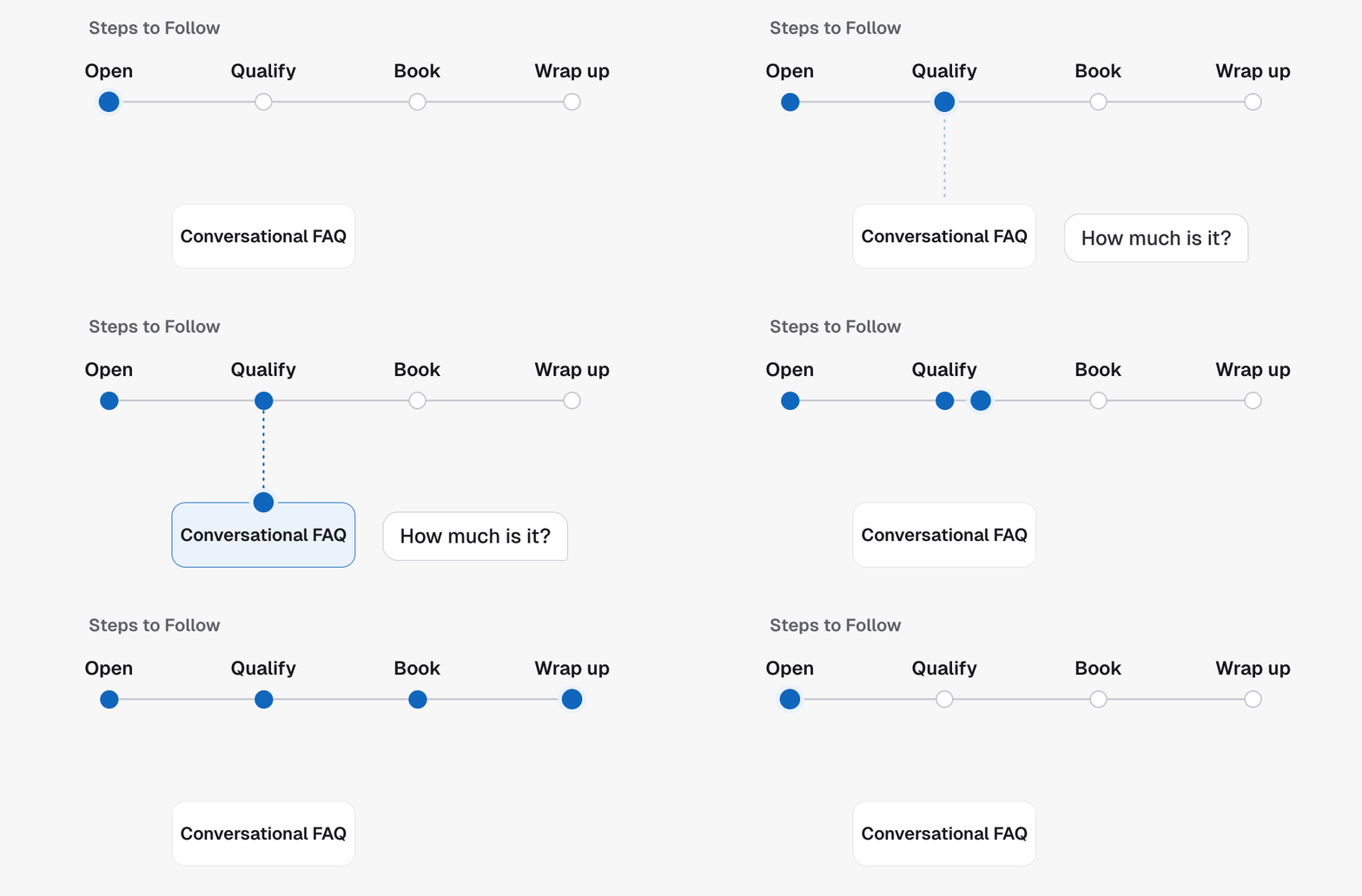
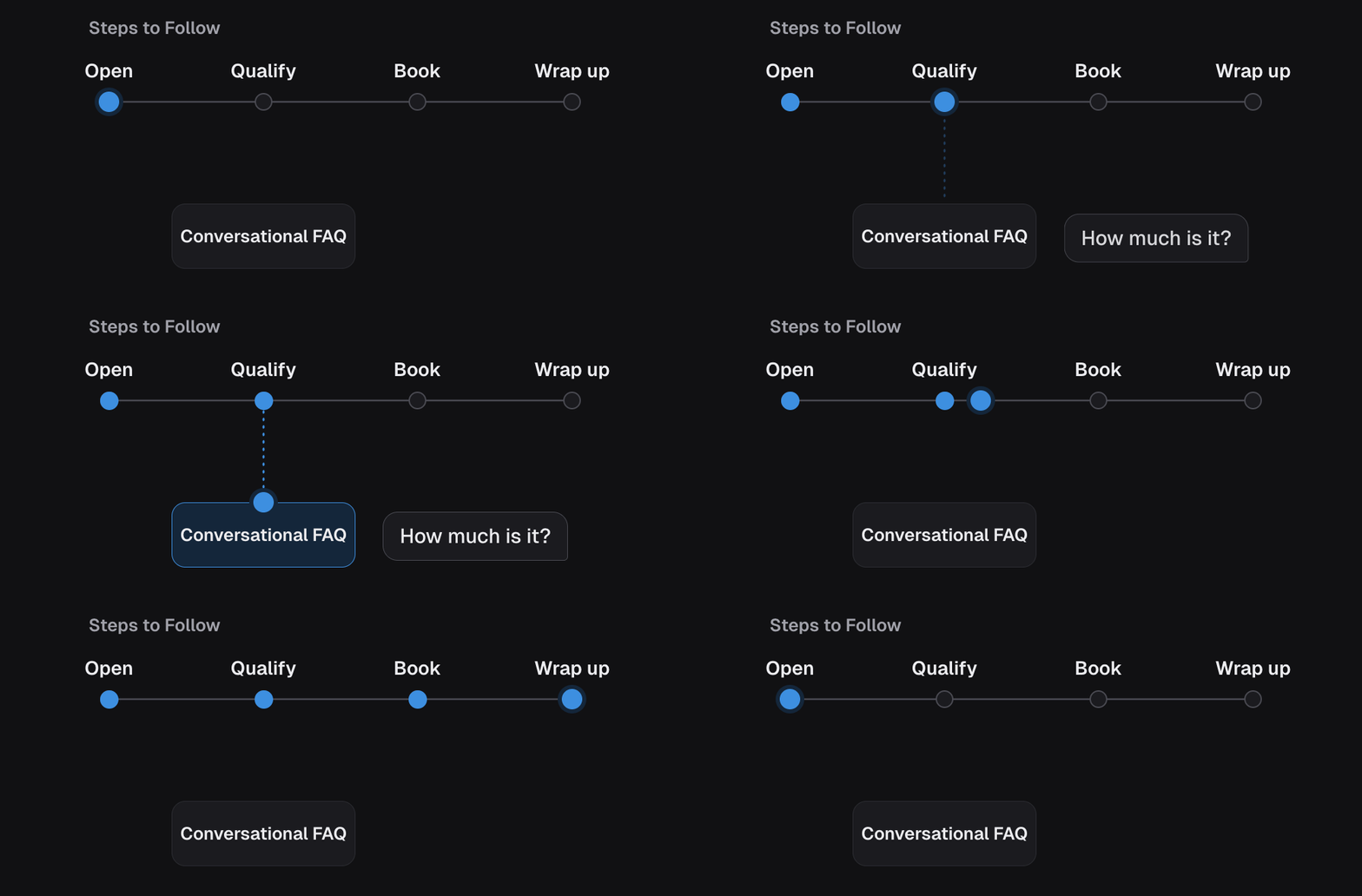
The test for what belongs here
Who started it?- The agent is driving toward it, so it belongs in the Steps.
- The lead raised it, so it belongs in the FAQ.
The shape of an entry
A worked example
This is the quality bar. Square brackets are what you fill in for your business, and they are never spoken.- The opener of each line is tuned to the feeling: “oh, honestly” reassures on cost, “yeah, totally” validates the partner, “oh, actually, no” cushions a no.
- The two objections consider a soft nudge. The two questions just bridge back.
- The nudge sits below the line, never inside the quote.
- The commitment entry braces before the no, rather than a flat “nope”.
- The objections carry an instruction to stop nudging.
- The area list is marked as a check, not something to recite.
The two kinds of entry end differently
This is the part most drafts get wrong, and it is the difference between an agent that reads the room and one that sounds like it is working a script.Objections
Price, “I need to think about it”, “just send me info”, “not right now”.Acknowledge, reframe, and then decide whether to nudge toward the next
step. The nudge is not automatic.
Questions and detours
What is this, how does X work, where are you based, how did you get my
number.Answer briefly, then bridge straight back to the step you were on. A
question is a detour, not resistance.
The opener is where the warmth lives
The first few words of each line are the agent’s acknowledgement for that turn, and they are yours to write. So tune them to what was actually raised: reassuring on a cost worry, validating on “I need to check with someone”, light on “I’m busy”, calm and undefensive on “is this a scam”. A line with no opener reads cold and gives the agent nothing to steer with.Saying no is the one to get right
People do not blurt a no. They cushion it. A soft brace first, then the no gently, then what is true:What not to put in the FAQ
There is a layer underneath your script that runs on every call and already owns some of this. Writing your own entry for it does not add safety, it double answers and contradicts.
If one of these is in your draft, delete it. The FAQ is your business’s
curveballs, not universal call handling.
The failure to avoid: bare question and answer pairs
Objections worth covering
Source the real ones from your own experience, because you know your pushback better than any template does. These near universal ones are worth checking off, one or two spoken sentences each:- “I’m not interested”, raised mid call rather than at hello. Acknowledge, reframe around the specific value, one question to re engage.
- “Now’s not a good time.” Agree, and offer a concrete alternative.
- “Just send me something first.” Acknowledge, but anchor the next step instead of settling for the send.
- “How did you get my number / is this a scam?” Answer plainly from the lead source. Do not get defensive, and move on.
- “What’s this going to cost / is it free?” Answer with your real terms. Never invent a number.
- “I need to talk to someone / think about it.” Acknowledge, lower the stakes of the next step, propose it anyway, once.
Internal versus spoken
Reference data (accepted plans, service areas, prices) is a check, not a script. Mark it, the same way you would in the Steps:Keep entries spoken sized
One or two sentences. A single turn. At most one question. Conversational, light on fillers, never a paragraph. You are keeping the door open, not winning a debate. And every entry hands the conversation back where it came from. An FAQ entry is never a sub script that ends somewhere new.In the API
- Get agent with
view=scriptreads the script, FAQ included - Update agent writes it back as
prompt, in one piece - The prompt maps every script field