> ## Documentation Index
> Fetch the complete documentation index at: https://docs.teamfollowup.ai/llms.txt
> Use this file to discover all available pages before exploring further.
> ## Agent Instructions
> Use the public API base URL: https://api.teamfollowup.ai/api.
> Authenticate public API requests with Authorization: Bearer YOUR_API_KEY.
> Use product-owned terms: agents, campaigns, projects (GoHighLevel sub-accounts), contacts, calls, outcomes, skills, cadences, phone numbers.
> Scope requests by locationId rather than projectName.
> Read the guide linked from each API reference group before recommending an endpoint.
# Writing the Conversational FAQ
> The reactive half of the script: what the agent does when the lead brings something up. Objections end differently from questions, and that difference is what stops it sounding pushy.
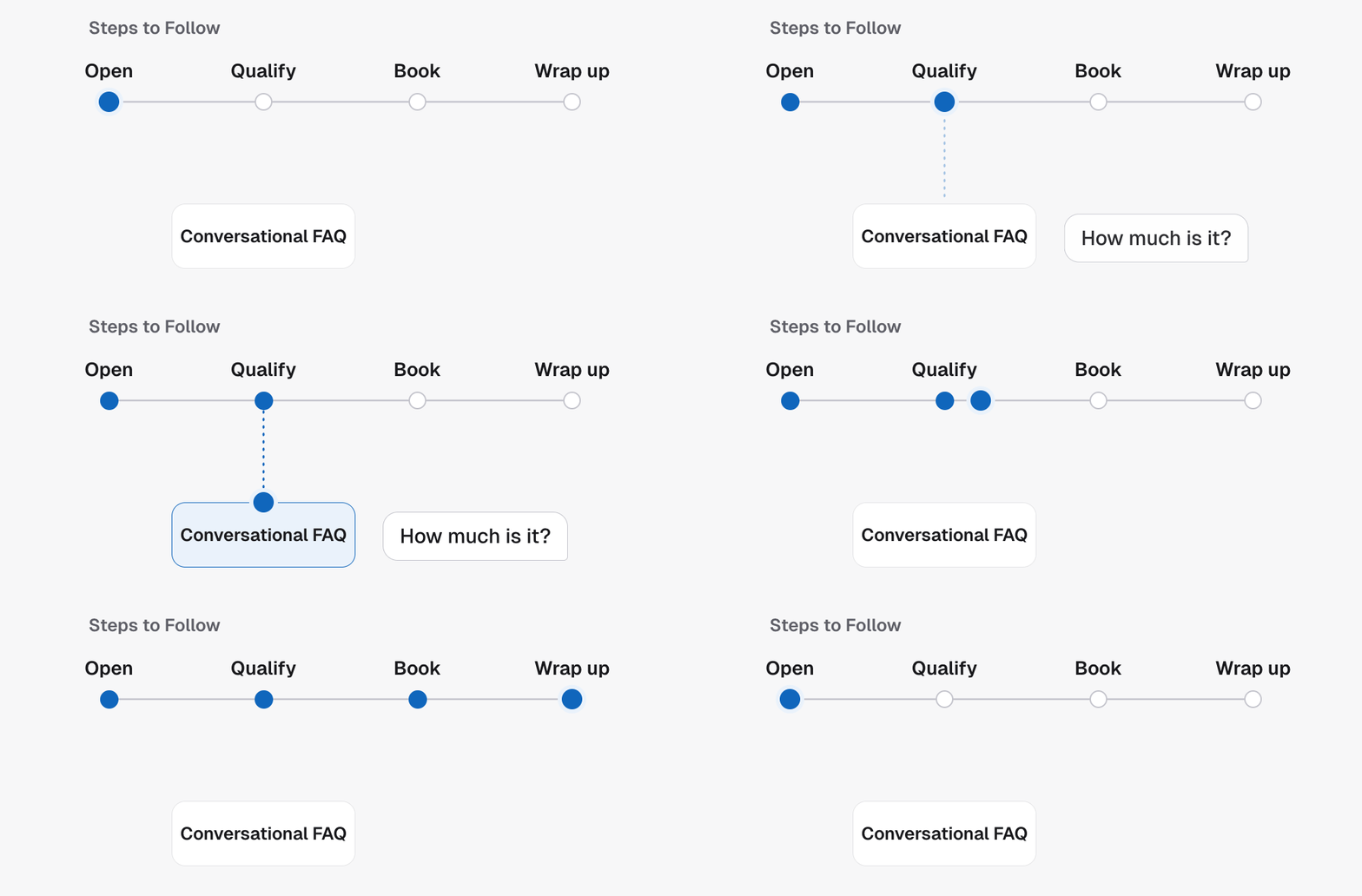
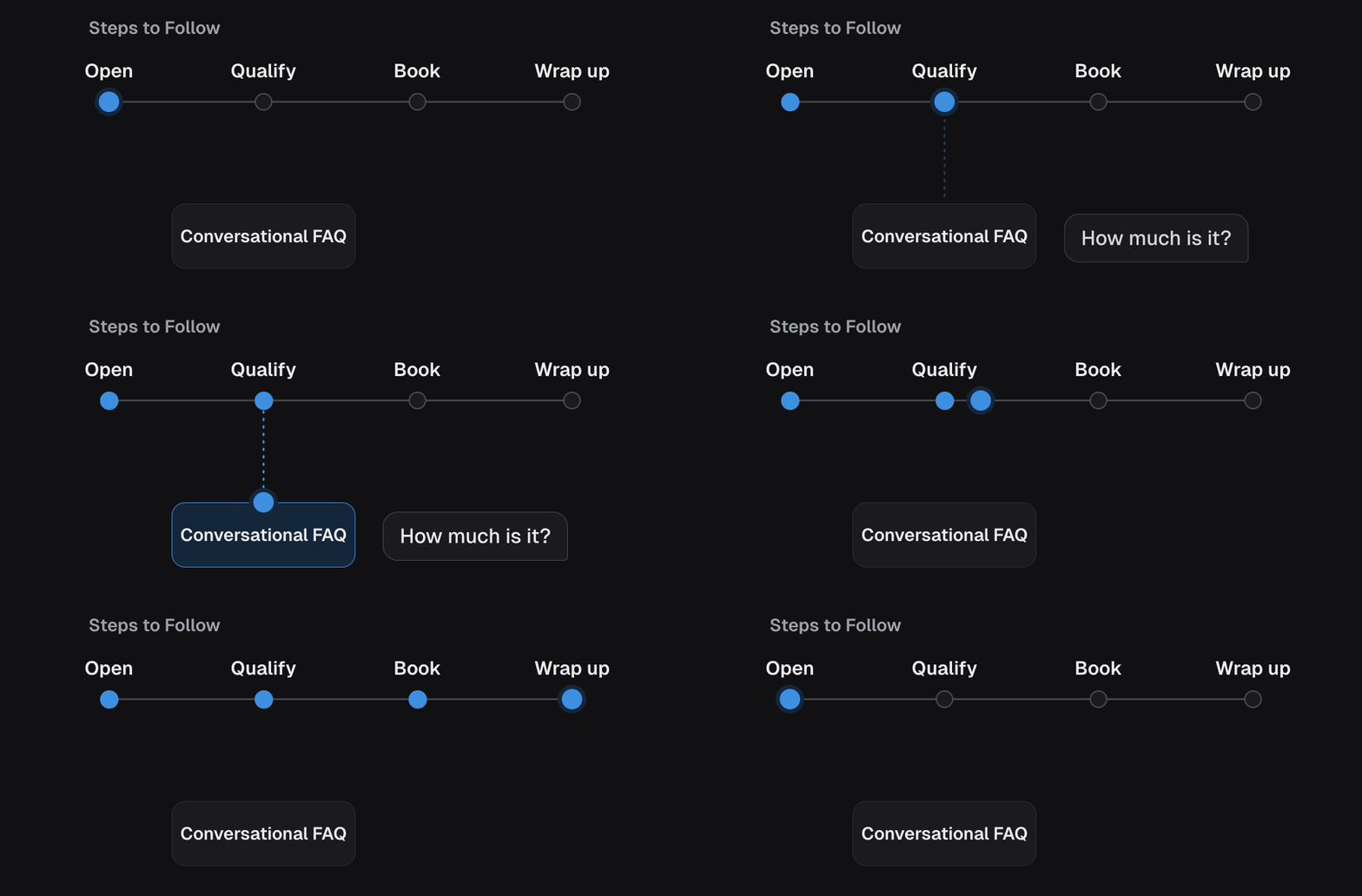
The script has two halves. The [Steps to Follow](/agents/writing-steps) are the
proactive half: what the agent drives toward. The **Conversational FAQ** is the
reactive half: everything the lead throws at it that is not on that path.
 ## The test for what belongs here
**Who started it?**
* The agent is driving toward it, so it belongs in the Steps.
* The lead raised it, so it belongs in the FAQ.
Objections, questions, deflections, curveballs. If the lead brought it up, it is
reactive, and it goes here. Keeping reactive handling out of the Steps matters
more than it sounds: a step is something the agent *drives toward*, so an
objection written as a step makes the agent go looking for the objection.
## The shape of an entry
```
**""**
e.g. ""
```
The flow instruction goes in the note **under** the line, never inside the quote.
No "\[then bridge back]" baked into text the agent is going to say out loud. And
add a nudge only where the next move is genuinely obvious. Leaving it off is how
you tell the agent to use its judgement.
## A worked example
This is the quality bar. Square brackets are what you fill in for your business,
and they are never spoken.
```
# Conversational FAQ
Reactive only - the lead brought this up, so handle it without restarting the call. Keep every answer short and human, and read the room. The example under each is the spoken line; the note beneath it (where there is one) tells you what to do with the flow next.
**"How much is this going to cost?"**
Money's the worry - reassure first; don't quote a hard number if it's case-by-case.
e.g. "oh, honestly - don't worry too much about the cost side for now. it really depends on your situation, and that's exactly what we'd walk through with you. want me to get you set up so you get real numbers?"
That last question only if there's momentum; if they keep deflecting, drop it and just answer warmly.
**"I need to talk to my partner first."**
Validate it - this is fair, not resistance. Lower the stakes of the next step rather than pushing.
e.g. "yeah, totally - that makes sense. honestly that's kind of the whole point of this - you get all the answers first, then take 'em back to decide together. want me to line something up so you've got it to work with?"
Nudge once; if they're still not ready, leave the door open and stop asking.
**"Is there any commitment?"** (the honest answer is no)
Cushion the no, then reframe - never blurt it.
e.g. "oh, actually - no, there's no commitment at all. it's totally up to you."
Then bridge back to where you were.
**"What is it you actually do?"**
Quick and factual - this is a detour, not pushback.
e.g. "yeah, so we help folks with [one line of what the business does]."
Off-topic question - answer it and carry straight on with the step you were on.
**"Do you cover my area?"**
Answer off your internal list - never read the whole list out loud.
e.g. "oh - whereabouts are you based?"
(For your check only, not to recite: [the covered areas].)
```
Every technique on this page is in that example:
* The opener of each line is tuned to the feeling: "oh, honestly" reassures on
cost, "yeah, totally" validates the partner, "oh, actually, no" cushions a no.
* The two objections consider a soft nudge. The two questions just bridge back.
* The nudge sits below the line, never inside the quote.
* The commitment entry braces before the no, rather than a flat "nope".
* The objections carry an instruction to **stop** nudging.
* The area list is marked as a check, not something to recite.
## The two kinds of entry end differently
This is the part most drafts get wrong, and it is the difference between an agent
that reads the room and one that sounds like it is working a script.
Price, "I need to think about it", "just send me info", "not right now".
Acknowledge, reframe, and **then decide** whether to nudge toward the next
step. The nudge is not automatic.
What is this, how does X work, where are you based, how did you get my
number.
Answer briefly, then bridge straight back to the step you were on. A
question is a detour, not resistance.
Reflexively pushing the objective after every objection is what creates the
"so, want to go ahead? what works for you?" loop that makes people hang up.
Nudge on genuine momentum. If they keep deflecting, or you have already nudged
once or twice, stop asking: answer warmly and leave the door open. Sometimes
the right move is to answer and let it breathe.
## The opener is where the warmth lives
The first few words of each line **are** the agent's acknowledgement for that
turn, and they are yours to write. So tune them to what was actually raised:
reassuring on a cost worry, validating on "I need to check with someone", light
on "I'm busy", calm and undefensive on "is this a scam".
A line with no opener reads cold and gives the agent nothing to steer with.
### Saying no is the one to get right
People do not blurt a no. They cushion it. A soft brace first, then the no
gently, then what **is** true:
```
e.g. "oh, actually - no, there's no commitment at all. it's totally up to you."
```
The brace ("oh, actually", "I'm sorry, but", "not quite") is what stops it
landing flat. The answer still leads honestly, rather than a bright "yeah!" that
has to be reversed half a sentence later, but the turn is cushioned.
## What not to put in the FAQ
There is a layer underneath your script that runs on every call and already owns
some of this. Writing your own entry for it does not add safety, it double
answers and contradicts.
| Leave out | Why |
| - | - |
| **"Are you an AI / a robot / a real person?"** | Disclosure is owned by the universal layer. Leave it out entirely. |
| **First reactions** at hello: wrong number, "I'm busy", "not interested", "don't call again" | The layer owns the reflex brush off. A considered objection mid call is still yours. |
| **Pacing, persona, speech style, one question per turn** | Not yours. Never restate them. |
| **A second acknowledgement** | Your opener already is the acknowledgement. Do not also write a rule telling the agent to acknowledge, or it stacks two. |
If one of these is in your draft, delete it. The FAQ is your business's
curveballs, not universal call handling.
### The failure to avoid: bare question and answer pairs
```text Cold, and double answers the layer theme={"dark"}
"How much does it cost?" - It depends on your situation.
"Are you an AI?" - Yes, I am an AI assistant here to help you.
```
```text Register, a human line, a nudge you can drop theme={"dark"}
**"How much is this going to cost?"**
Money's the worry - reassure; don't quote a hard number if it's case-by-case.
e.g. "oh, honestly - don't worry too much about the cost for now. it depends on your situation."
Drop that last question if they keep deflecting.
```
## Objections worth covering
Source the real ones from your own experience, because you know your pushback
better than any template does. These near universal ones are worth checking off,
one or two spoken sentences each:
* **"I'm not interested"**, raised mid call rather than at hello. Acknowledge,
reframe around the specific value, one question to re engage.
* **"Now's not a good time."** Agree, and offer a concrete alternative.
* **"Just send me something first."** Acknowledge, but anchor the next step
instead of settling for the send.
* **"How did you get my number / is this a scam?"** Answer plainly from the lead
source. Do not get defensive, and move on.
* **"What's this going to cost / is it free?"** Answer with your real terms.
Never invent a number.
* **"I need to talk to someone / think about it."** Acknowledge, lower the stakes
of the next step, propose it anyway, once.
## Internal versus spoken
Reference data (accepted plans, service areas, prices) is a check, not a script.
Mark it, the same way you would in the [Steps](/agents/writing-steps):
```
(For your check only, not to recite: [the covered areas].)
```
Never put a bracketed instruction inside a spoken quote. The agent will say it.
## Keep entries spoken sized
One or two sentences. A single turn. At most one question.
Conversational, light on fillers, never a paragraph. You are keeping the door
open, not winning a debate. And every entry hands the conversation back where it
came from. An FAQ entry is never a sub script that ends somewhere new.
## In the API
* [Get agent](/api-reference/agents/get-agent) with `view=script` reads the script, FAQ included
* [Update agent](/api-reference/agents/update-agent) writes it back as `prompt`, in one piece
* [The prompt](/agents/prompt) maps every script field
## The test for what belongs here
**Who started it?**
* The agent is driving toward it, so it belongs in the Steps.
* The lead raised it, so it belongs in the FAQ.
Objections, questions, deflections, curveballs. If the lead brought it up, it is
reactive, and it goes here. Keeping reactive handling out of the Steps matters
more than it sounds: a step is something the agent *drives toward*, so an
objection written as a step makes the agent go looking for the objection.
## The shape of an entry
```
**""**
e.g. ""
```
The flow instruction goes in the note **under** the line, never inside the quote.
No "\[then bridge back]" baked into text the agent is going to say out loud. And
add a nudge only where the next move is genuinely obvious. Leaving it off is how
you tell the agent to use its judgement.
## A worked example
This is the quality bar. Square brackets are what you fill in for your business,
and they are never spoken.
```
# Conversational FAQ
Reactive only - the lead brought this up, so handle it without restarting the call. Keep every answer short and human, and read the room. The example under each is the spoken line; the note beneath it (where there is one) tells you what to do with the flow next.
**"How much is this going to cost?"**
Money's the worry - reassure first; don't quote a hard number if it's case-by-case.
e.g. "oh, honestly - don't worry too much about the cost side for now. it really depends on your situation, and that's exactly what we'd walk through with you. want me to get you set up so you get real numbers?"
That last question only if there's momentum; if they keep deflecting, drop it and just answer warmly.
**"I need to talk to my partner first."**
Validate it - this is fair, not resistance. Lower the stakes of the next step rather than pushing.
e.g. "yeah, totally - that makes sense. honestly that's kind of the whole point of this - you get all the answers first, then take 'em back to decide together. want me to line something up so you've got it to work with?"
Nudge once; if they're still not ready, leave the door open and stop asking.
**"Is there any commitment?"** (the honest answer is no)
Cushion the no, then reframe - never blurt it.
e.g. "oh, actually - no, there's no commitment at all. it's totally up to you."
Then bridge back to where you were.
**"What is it you actually do?"**
Quick and factual - this is a detour, not pushback.
e.g. "yeah, so we help folks with [one line of what the business does]."
Off-topic question - answer it and carry straight on with the step you were on.
**"Do you cover my area?"**
Answer off your internal list - never read the whole list out loud.
e.g. "oh - whereabouts are you based?"
(For your check only, not to recite: [the covered areas].)
```
Every technique on this page is in that example:
* The opener of each line is tuned to the feeling: "oh, honestly" reassures on
cost, "yeah, totally" validates the partner, "oh, actually, no" cushions a no.
* The two objections consider a soft nudge. The two questions just bridge back.
* The nudge sits below the line, never inside the quote.
* The commitment entry braces before the no, rather than a flat "nope".
* The objections carry an instruction to **stop** nudging.
* The area list is marked as a check, not something to recite.
## The two kinds of entry end differently
This is the part most drafts get wrong, and it is the difference between an agent
that reads the room and one that sounds like it is working a script.
Price, "I need to think about it", "just send me info", "not right now".
Acknowledge, reframe, and **then decide** whether to nudge toward the next
step. The nudge is not automatic.
What is this, how does X work, where are you based, how did you get my
number.
Answer briefly, then bridge straight back to the step you were on. A
question is a detour, not resistance.
Reflexively pushing the objective after every objection is what creates the
"so, want to go ahead? what works for you?" loop that makes people hang up.
Nudge on genuine momentum. If they keep deflecting, or you have already nudged
once or twice, stop asking: answer warmly and leave the door open. Sometimes
the right move is to answer and let it breathe.
## The opener is where the warmth lives
The first few words of each line **are** the agent's acknowledgement for that
turn, and they are yours to write. So tune them to what was actually raised:
reassuring on a cost worry, validating on "I need to check with someone", light
on "I'm busy", calm and undefensive on "is this a scam".
A line with no opener reads cold and gives the agent nothing to steer with.
### Saying no is the one to get right
People do not blurt a no. They cushion it. A soft brace first, then the no
gently, then what **is** true:
```
e.g. "oh, actually - no, there's no commitment at all. it's totally up to you."
```
The brace ("oh, actually", "I'm sorry, but", "not quite") is what stops it
landing flat. The answer still leads honestly, rather than a bright "yeah!" that
has to be reversed half a sentence later, but the turn is cushioned.
## What not to put in the FAQ
There is a layer underneath your script that runs on every call and already owns
some of this. Writing your own entry for it does not add safety, it double
answers and contradicts.
| Leave out | Why |
| - | - |
| **"Are you an AI / a robot / a real person?"** | Disclosure is owned by the universal layer. Leave it out entirely. |
| **First reactions** at hello: wrong number, "I'm busy", "not interested", "don't call again" | The layer owns the reflex brush off. A considered objection mid call is still yours. |
| **Pacing, persona, speech style, one question per turn** | Not yours. Never restate them. |
| **A second acknowledgement** | Your opener already is the acknowledgement. Do not also write a rule telling the agent to acknowledge, or it stacks two. |
If one of these is in your draft, delete it. The FAQ is your business's
curveballs, not universal call handling.
### The failure to avoid: bare question and answer pairs
```text Cold, and double answers the layer theme={"dark"}
"How much does it cost?" - It depends on your situation.
"Are you an AI?" - Yes, I am an AI assistant here to help you.
```
```text Register, a human line, a nudge you can drop theme={"dark"}
**"How much is this going to cost?"**
Money's the worry - reassure; don't quote a hard number if it's case-by-case.
e.g. "oh, honestly - don't worry too much about the cost for now. it depends on your situation."
Drop that last question if they keep deflecting.
```
## Objections worth covering
Source the real ones from your own experience, because you know your pushback
better than any template does. These near universal ones are worth checking off,
one or two spoken sentences each:
* **"I'm not interested"**, raised mid call rather than at hello. Acknowledge,
reframe around the specific value, one question to re engage.
* **"Now's not a good time."** Agree, and offer a concrete alternative.
* **"Just send me something first."** Acknowledge, but anchor the next step
instead of settling for the send.
* **"How did you get my number / is this a scam?"** Answer plainly from the lead
source. Do not get defensive, and move on.
* **"What's this going to cost / is it free?"** Answer with your real terms.
Never invent a number.
* **"I need to talk to someone / think about it."** Acknowledge, lower the stakes
of the next step, propose it anyway, once.
## Internal versus spoken
Reference data (accepted plans, service areas, prices) is a check, not a script.
Mark it, the same way you would in the [Steps](/agents/writing-steps):
```
(For your check only, not to recite: [the covered areas].)
```
Never put a bracketed instruction inside a spoken quote. The agent will say it.
## Keep entries spoken sized
One or two sentences. A single turn. At most one question.
Conversational, light on fillers, never a paragraph. You are keeping the door
open, not winning a debate. And every entry hands the conversation back where it
came from. An FAQ entry is never a sub script that ends somewhere new.
## In the API
* [Get agent](/api-reference/agents/get-agent) with `view=script` reads the script, FAQ included
* [Update agent](/api-reference/agents/update-agent) writes it back as `prompt`, in one piece
* [The prompt](/agents/prompt) maps every script field